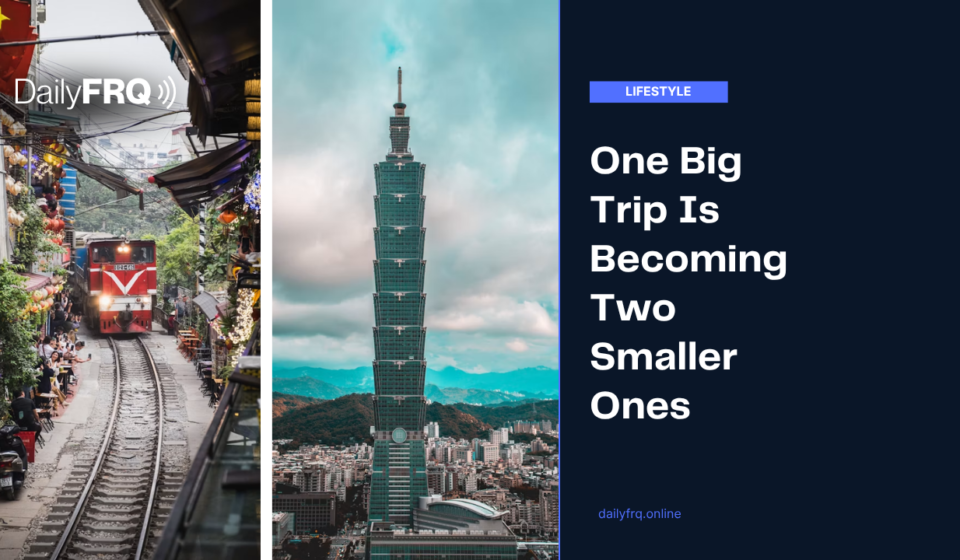
One Big Trip Is Becoming Two Smaller Ones
Klook Philippines surveyed more than 11,000 travelers worldwide for its Travel Pulse 2026 study, including 500 Filipino respondents from Gen Z and Millennial groups. The results point to a shift in how Filipinos are spending their travel budget this year. Instead of saving up for one long-haul trip, more people are booking shorter international getaways closer to home.
Vietnam bookings grew 193 percent. Taiwan grew 124 percent. Within the study, Northeast Asia (Japan, South Korea, China, Hong Kong, Taiwan) accounted for 67 percent of international interest, and Southeast Asia (Vietnam, Thailand, Singapore, Indonesia, Malaysia) accounted for 30 percent. Nognog in the City reported the full breakdown from the study.
Staying Close Is Still the Default
Domestic travel remains the bigger habit. Klook’s study found 71 percent of Filipino travelers stayed within the country last year, with Metro Manila, Boracay, and Cebu as the usual stops, and Cavite and Pampanga rising as newer weekend spots. Manila Bulletin’s coverage of the same study also noted Thailand as a third international destination gaining ground alongside Vietnam and Taiwan.
A Second Data Set Puts Vietnam’s Growth Lower
Not every source agrees on the size of Vietnam’s jump. A separate dataset pulled from Trip.com flight bookings, covered by SunStar, put Vietnam’s growth at 122 percent rather than 193 percent. That same Trip.com data flagged other destinations climbing even faster: Palau at 663 percent, Oman at 482 percent, and Saudi Arabia at 145 percent. Hong Kong, Singapore, Tokyo, Bangkok, and Taipei still lead in raw booking volume.
The two numbers for Vietnam are not measuring the same thing. Klook’s figure comes from a Filipino traveler survey. Trip.com’s figure comes from actual flight bookings across a broader base. Both point the same direction. They just don’t agree on the size of it.
Why the Money Is Moving This Way
Budget still leads the decision. Forty two percent of respondents in Klook’s study named affordability as their top factor. But spending habits are shifting inside that budget. People are willing to go over budget for food, local tours, and workshops rather than shopping. Manila Bulletin reported that close to half of respondents ranked shared experiences with loved ones as a top priority when planning a 2026 trip. Nognog’s write-up on the same Klook study put local markets and hidden gems ahead of traditional attractions, at 38.9 percent.
Michelle Ho, general manager of Klook Philippines, said the study helps the company understand “not just where Filipinos want to go, but why they travel.”
Planning Habits Are Changing Too
Millennials are leading AI use for researching destinations and building itineraries, while Gen Z leans on AI mostly for translation and quick planning. Despite that, social media (Facebook, YouTube, Instagram, and TikTok) remains the most trusted source for real trip advice, especially from other travelers sharing what actually worked.
The pattern across both datasets is the same. Filipino travelers are choosing trips based on what they will actually do once they land, not just where the flight goes.