
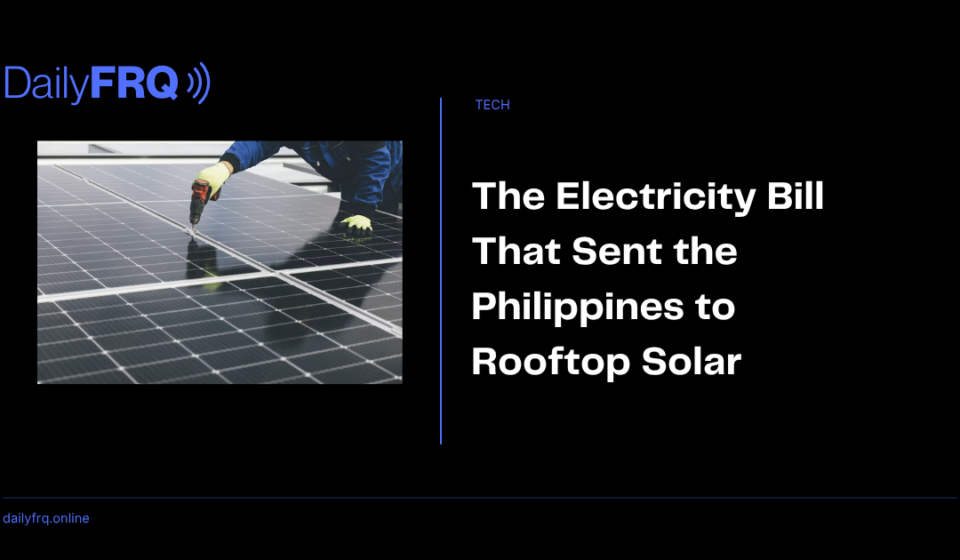
The Bill That Pushed a Country to the Roof
Electricity prices in the Philippines have been climbing since late February, when the conflict in the Middle East started rippling through global energy markets. Meralco, the country’s main power distributor, has raised rates by about 10% since then.
That increase landed on a country that already pays more for electricity than any of its Southeast Asian neighbors. There are few subsidies to soften the blow. For a lot of households and small businesses, the math on rooftop solar finally made sense.
The numbers show how fast that shift happened. Imports of Chinese solar panels hit $407 million in the three months through May, up 145% from the same period last year.
Installers Are Feeling It Too
Demand is not just showing up in shipping data. Philergy German Solar, a solar installation company, reported that customer inquiries in the first five months of the year were more than two and a half times higher than the year before.
Energy think tank Ember expects rooftop solar capacity in the Philippines to nearly triple, reaching 3,500 megawatts within two years. Falling equipment costs combined with rising electricity prices are shortening the time it takes for a system to pay for itself.
What Is Still in the Way
Going solar is not simple, even with the math working in its favor. The upfront cost is still high for most households. Supply bottlenecks slow down installation timelines. Government-backed financing exists, but it excludes private-sector workers, which cuts out a large share of the people who would benefit most.
The shift has less to do with climate messaging and more to do with a bill that kept arriving higher than the last one. Households are putting panels on the roof because it changes their own numbers, not because of a policy push.