Ten PhilSA Engineers Finish Rocket Training in South Korea
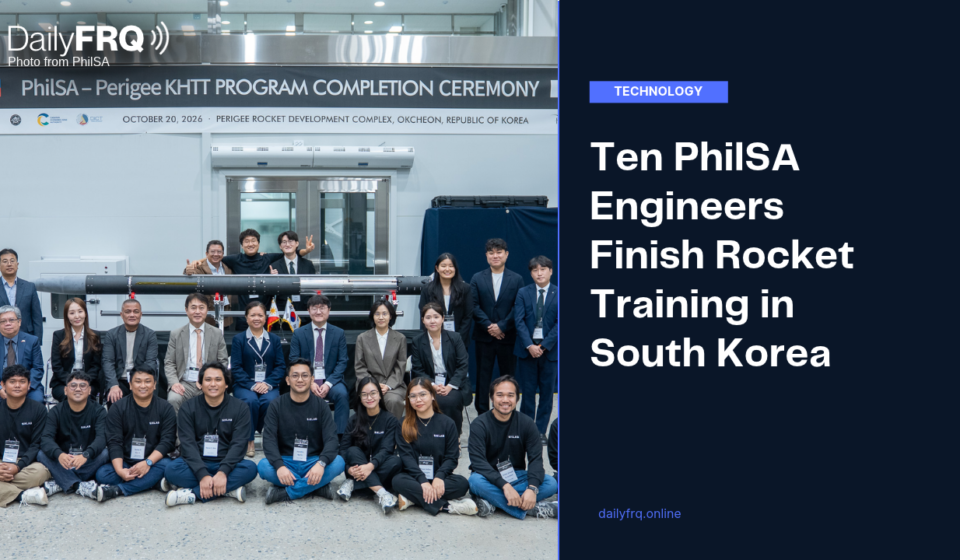
Ten engineers from the Philippine Space Agency (PhilSA) spent August to October 2026 in South Korea learning how a liquid-fueled rocket goes together. The rocket they worked on will be shipped to the Philippines and launched from Lal-lo, Cagayan, in 2027.
Two phases, one rocket
This was the second phase of PhilSA’s Know-How Transfer and Training Program. The first ran from October to November 2025 and covered rocket theory, launch-vehicle systems and assembly of rocket subsystems.
The second phase had the engineers work on the whole rocket. They handled full system assembly, integration and testing, and trained on the preparations and operations for the test launch. It sits under SIKLAB: Building Industrial Space Launch Systems Project, run with South Korean company Perigee Aerospace.
The rocket is Perigee’s Blue Whale 0.1, a liquid-propellant sounding rocket made for experimental flights, not for putting satellites into orbit. PhilSA describes it as South Korea’s first privately developed liquid-propellant rocket. It has flown test flights from Jeju Island.
What happens to the rocket
After further testing in the Philippines, it will carry a payload of about 2 kilograms to an altitude of at least 5 kilometers. PhilSA developed the payload itself. It is a technology demonstration for a future suborbital or satellite-based platform that detects and monitors radio signals from ground-based sources.
Officials have named February 14, 2027 as the target. PhilSA Director General Gay Jane Perez says that is a launch window, not a fixed date. Weather and technical conditions will decide it.
Who gets the training
PhilSA Space Mission Director Reina Reyes says the program is meant to develop people who can support rocket development and launch operations in the country. The ten engineers are expected to share what they learned with researchers and academic institutions. Two of them are women.
Philippine Ambassador to South Korea Bernadette Therese Fernandez welcomed the team at the embassy in Seoul ahead of the second phase.
New Space Economy, a trade publication, points out that a launch is a visible milestone, but whether the knowledge lasts depends on continued technical assignments and on keeping the trained people in the field.
The spaceport plan
The launch would be the first of a liquid-fueled sounding rocket from Philippine soil. The Philippine Space Council approved it on June 2, in a meeting chaired by President Ferdinand R. Marcos Jr. PhilSA is also pursuing a public-private partnership to build a Philippine spaceport.
PhilSA, the Department of Information and Communications Technology, the Cagayan Economic Zone Authority, Ascend International Gateway and Perigee Aerospace are all involved. PhilSA says a successful test would show the country has the technical, operational, safety and regulatory foundations for future launches.