
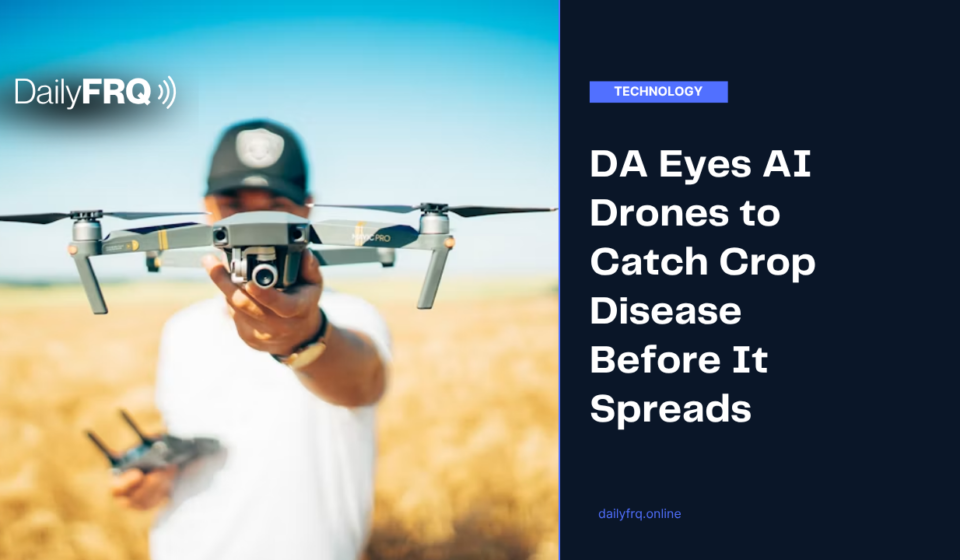
DA Eyes AI Drones to Catch Crop Disease Before It Spreads
The Department of Agriculture wants to change how Philippine farms get watched over, and it’s turning to a Japanese technology firm to do it. Drones fly above the fields. Artificial intelligence reads what the cameras catch. The point is to catch pest and disease problems while they’re still small enough to fix.
How the Prediction Actually Works
E-SupportLink (ESL), a technology firm based in Japan, developed the system. The same technology already runs on farms there. The setup pairs live drone imagery with historical local weather data, then runs both through machine learning models built to flag pest and disease risk before it shows up on the ground. That combination is what gives farmers and officials a heads up before an outbreak actually spreads.
DA Undersecretary Cheryl Natividad-Caballero said the technology lets farm managers act on a problem before it shows up, instead of only after. The system’s value, she said, goes beyond flying drones. It comes with predictive analysis and forecasting, so trouble can get flagged before it turns into a bigger problem. Catching issues early lowers the cost of managing them too, she added.
The Davao Test Run
ESL is already running trials on three banana farms in Davao del Norte and Davao de Oro. The work is happening under a deal ESL struck with the DA’s regional field office for Davao. Ground verification is underway now, to confirm the aerial data actually matches what’s happening on the ground. The system does more than flag disease. It counts plants, forecasts production, and helps growers fine tune farm inputs. Private banana producers have taken notice too, and some now want the same kind of aerial data for their own planning.
Sugar and Coconut Could Be Next
The DA is also considering the technology for sugarcane and coconut, two export crops that have struggled with pest pressure and production setbacks. Agriculture Secretary Francisco Tiu Laurel Jr. put it simply: earlier detection means better decisions, and better decisions mean steadier income for farmers.
The Real Test Is Access
Tiu Laurel said whether any of this actually matters comes down to cost. It has to reach small farmers, not just the large operations that can already afford new tools. The proposed deal has ESL training drone operators, building out the aerial imaging setup, and running the AI assessments on farm output. The DA is still weighing what support it can offer, from training through the Agricultural Training Institute to possible funding down the line.