
Why Reaching Your Goals Doesn’t Guarantee Happiness, and What Helps Instead
Reaching a big goal often doesn’t feel the way you expect. Here is what research says about why, what lifts your days instead, and what people regret most when they look back.
The win that felt like nothing
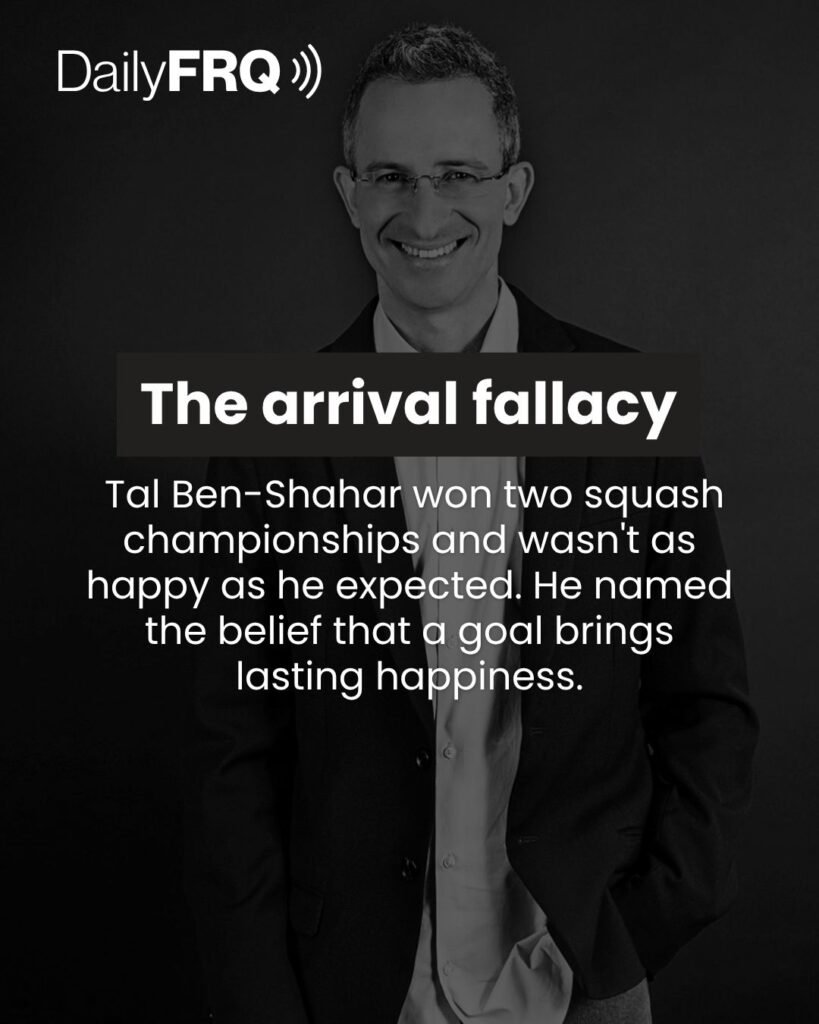
Tal Ben-Shahar won the U.S. Intercollegiate and Israeli National squash championships. He thought winning would make him much happier than it did. He later named the feeling the arrival fallacy in his book Happier: the belief that reaching a specific goal brings lasting happiness.
The belief is shaky. Reaching a goal doesn’t guarantee contentment, in the long term or even the short term. People adjust fast to their new position, and one finished goal usually shows you the next one. Ben-Shahar’s answer isn’t to stop setting goals. He suggests setting more, including small ones, so the “what now?” feeling has less room to take over.

Where the good days come from
Teresa Amabile, a psychologist and professor emerita at Harvard Business School, and Steven Kramer had 238 people on 26 project teams keep daily diaries. That added up to about 12,000 entries. Then they compared the best days with the worst.
Progress on meaningful work showed up in 76% of participants’ best days. Small steps counted, even ones that looked trivial. Setbacks cut deeper. Their effect on inner work life was two to three times stronger than the lift from progress.
Managers underrated this. In the researchers’ survey, they ranked supporting progress last among work motivators. The work also has to matter to the person doing it.
So mark the win when it happens, not when the whole project is done.
What people wish they had done sooner
Regret changes with time. Gilovich and Medvec found that people regret actions more in the short term, but over the long run they regret failures to act more. In a scenario study, 63% of participants expected the person who regretted not acting to feel more regret over the long run.
The pattern showed up in China, Japan, and Russia too. One summary of the research says long-term regrets often point to missed chances in education, careers, and romantic relationships. Regrets about actions tended to come with hot emotions. Regrets about inaction leaned toward wistfulness or despair.
Replications haven’t all agreed on the details. One team found overall support for the effects and said more work is needed to sort out the inconsistencies.

Mark it today
Keep your goals. Just don’t make them the only place you let yourself feel good.
Celebrate the small win on the day it happens. Then book the trip you’ve been putting off instead of waiting for someday.